Yankees Top 30 Prospects: Post Trade Deadline
- Aaron Lichstrahl

- 3 days ago
- 43 min read

Hello, welcome to my updated to 30 prospects article! The last time I updated publicly was on Mother’s day. While I have been keeping track and making changes in the time since, it is time to finally write up about my top 30. Between the inflows from the draft and the outflows from the trade deadline (goodbye, Henry Lalane, Jack Cebert, Kaeden Kent, Ben Grable, and Yovanny Cruz, it was a pleasure watching you all), there was plenty of recent movement. Also, for the first time, I am including future value grades.
Methodology
As this was my first time using the 20-80 scale, I did some research on how to best translate these grades. I settled on Fangraphs methodology, equipping the grade based on likely future outcome. The FV presented is what I think 60-70th percentile outcome for a player is. For example, someone graded 45, I believe it is likely the wind up as a platoon player In the MLB, but that doesn’t mean they could reach a higher outcome and become a regular, or even all-star caliber player.

However, just because a teenager has a 50 grade doesn’t mean they are there now, which is why I adopted my own risk assessment. This number indicates how likely it is to meet my future value outcome. The rubric goes:
1 – Finished product. This player is done developing. Typically for older players.
2 – Still time to grow, but I feel comfortable that they will meet my FV potential
3 – Raw and room to grow, but there have been consistent flashes
4 – Still very raw or some big holes to iron out to reach that potential.
5 – extremely risky. Most likely due to age (DSL) or injury history (Elbow/Shoulder injuries)
Without further ado, my Top 30 Prospects.
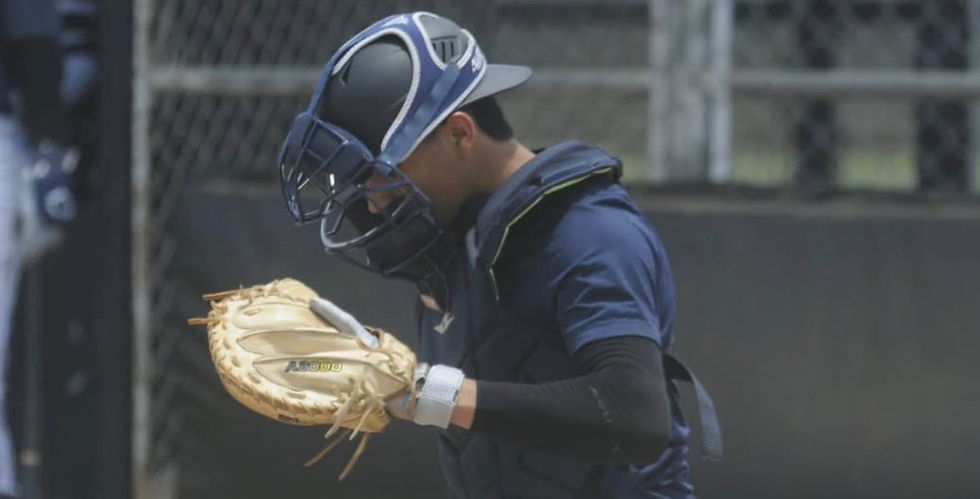
30. Eric Genther | 24.1 | C | A+
FV: 45 | Risk: 3 | Adj FV: 35
Season so Far: Eric Genther, a 2025 UDFA, started his season in High-A after a strong post-draft 2025 at Low-A. The first two months were solid but unspectacular, slashing .234/.378/.324 with just 2 home runs, 18.2 K%, 12.2 BB% for a 98 wRC+. However, since 5/29, Genther has been hitting lights out, with a slash of .306/.429/.519 with 9 home runs, 18.6 K%, 13.0 BB% for a 147 wRC+. The surge over the last 2+ months has raised Genther’s stock significantly.
Strengths: Genther is a high contact/high on base machine. On the season he has a chasse rate of 22% (83rd percentile) and a whiff rate of 20.2% (89th). While Genther will strike out some because he can be overly passive at times (15th percentile zone swing), I really do love that he is a good bet to hit for average and take his walks. He would project to be a pesky out in any lineup. While Genther will never be a big power hitter, it is very encouraging to see him find some game power since late May, as his .213 ISO is very respectable.
Areas for Growth: As just mentioned, Genther’s game pop has maybe overperformed his raw pop. While the raw power likely won’t improve past fringe average, there are ways for him to find some more game power. Firstly, getting the ball in the air more, as his 49.4 GB% is leaving extra base hits on the table. The other area is improving his pull air rate. Even during his hot streak, his pull air rate is only 10.3%, still below average. The other offensive area for growth is the platoon splits. He is currently far better vs RHP than LHP, with a .884 OPS vs .644, respectively. Until that gap closes, I can’ t increase his FV past 45. Defensively, Genther is in the process converting from outfield to catcher. While the Yankees believing in him behind the plate by making that move is telling, there is still work to do with his play behind the plate. Genther reminds me of Brendan Jones, a prospect I had right outside my top 10 before his inclusion in the Ryan Weathers trade. His good swing decisions, plus contact ability, and being able to maximize his game power made him very attractive to me, and Genther fits that mold, but even better, doing it as a catcher. While he may be older, I do like what the Yankees have here.
29. Richard Matic | 19.0 | 1B | FCL
FV: 50 | Risk: 4 | Adj FV: 35
Season so Far: Richard Matic made the move stateside after an exceptional DSL campaign in 2025. Matic spent the entire FCL season as the leadoff hitter, showing the organization’s belief in him as a hitting prospect. He hit .273//394/.439 with 4 home runs, 23.1 K%, 13.6 BB% for a 108 wRC+.
Strengths: Richard Matic’s best offensive attribute is his swing decisions. He displayed a reluctance to chase outside the zone but swung at an above average rate in the zone. A high floor on base threat is a good starting point for a corner infielder. Matic is growing into more strength, posting above average exit velocities. Only just turning 19 years old, Matic has good tools to be a high OBP, high SLG batter at first. Matic took a major jump with his contact ability between his first and second seasons in the DSL. It was very encouraging to see that his hit tool didn’t regress when making the jump up in level.
Areas for Growth: While Matic does have some raw power, he has struggled to tap into it in game. While his .231 ISO in DSL last year wasn’t bad, there seemed to be more in the tank. Following it up with a .157 ISO in FCL was somewhat disappointing. As a corner infielder, and most likely a first baseman, it is important he finds his game power. While Matic has posted respectable contact rates, there is room for growth here. One thing of note, his overall whiff rate was better than his zone whiff rate, indicating he was making a decent amount of contact outside of the zone. If he can translate some of that in the zone, it should help. There are also questions about how skilled a defender Matic can be at either third or most likely first. While it wasn’t a bad season in FCL, some of the questions prior to his move stateside still linger. I am intrigued by what we will see when he moves to Low-A next year.
28. Chien-Fan Lai | 18.5 | RHSP | DSL
FV: 55 | Risk: 5 | Adj FV: 35
Season so Far: Outside of the recent draft class, Chein-Fan Lai is the most recent addition to the Yankees farm system. Lai was a summer IFA signing out of Taiwan for $873k. After a dominant high-school season, Lai has joined the Yankees organization. He has yet to pitch for the organization, and likely won’t debut until 2027.
Strengths: Lai isn’t the biggest guy, but he is able to maximize his 6’ frame well. From the footage available, Lai seems to have very sound mechanics, something that is instilled in many Asian pitchers. He has repeatable mechanics giving him a good chance to be a consistent strike thrower. Lai has a very over the top delivery, giving him a lot of success north and south. His fastball, which sits 91-94, has topped out at 96. He can generate good backspin, giving the pitch riding life at the top of the zone. He pairs it with a knee-buckling curveball that gets incredible depth. It is a plus offering.
Areas for Growth: Polishing off the pitch mix is the obvious area for improvement with Lai. He has a usable slider, but his changeup is very raw. The Yankees pitching lab should get this ironed out rather quickly. Other than that, it is hard to comment too much on a kid with very little available footage or data. This is an exciting but raw talent the Yankees acquired. It will take some time, but he is a name everyone should be excited about, and hopefully the first of many amateur Asian players to join the organization.
27. Bear Harrison | 21.6 | C | A-
FV: 45 | Risk: 3 | Adj FV: 35
Season so Far: Bear Harrison, the brother of Milwaukee Brewers pitcher Kyle, was the 5th round selection for the Yankees out of Texas A&M. Harrison had a very good season for the Aggies, walking more than he struck out and hitting 12 home runs. He has started playing games for the Tampa Tarpons, off to a solid start.
Strengths: Bear Harrison is a power hitting catcher. He has a sturdy 6’3” frame and can put up big exit velocities. During his time in college, Harrison maintained exemplary plate discipline. He rarely chases outside of the zone, making him an on-base threat with walks. Harrison has shown promise defensively as well. With quiet hands, he has the tools to become a plus framer. His blocking and throwing are a work in progress, but he has similar tools to Austin Wells when the Yankees first got him, so I am bullish they can make him at least an average defender behind the plate.
Areas for Growth: Perhaps Harrison’s biggest flag is his hit tool. Harrison’s zone contact rates were well below average in college. While he didn’t strike out too much in college due to his swing decisions, I do wonder how his K% will fluctuate in pro ball as we get a larger sample. If he can maintain a K% in the 20-25% range as he elevates the ladder, he will project very well as a 3 true outcomes backstop. It should also be noted that he had a higher percentile ranking in out of zone contact, so I do wonder if there are some easy corrections to help him in the zone. The other current issue is game power. Harrison had decent pull air rates in college, but they could certainly use another step up as he enters pro ball. With power as his main tool, Harrison will be most useful when he is a 20-25 home run threat. Harrison was one of my top targets in the draft, so I am very excited to see what the Yankees can do with him.
26. Stiven Marinez | 19.0 | SS | DSL
FV: 55 | Risk: 5 | Adj FV: 35
Season so Far: After a good 2025 season, Marinez returned to the DSL and improved across the board. On the season, he slashed .314/.451/.523 with 6 home runs, 13% K rate, 17.7 BB%, for a 135 wRC+. He hit the ball in the air more and made more contact, a successful DSL campaign.
Strengths: Marinez is a gifted fielder. Twitchy and with good range, he has a legitimate shot to remain at shortstop. With the bat, he made a nice gain in his contact ability. Most impressively, he showed more power, hitting 5 more home runs than the previous year. Hitting for .40 points higher in batting average while dropping his BABIP by nearly .30 points is a good trend. Marinez has had two seasons of exhibiting good plate discipline. He has been a conservative swinger but was a bit more aggressive this season. It brought his K% down by almost 10%. Overall, Marinez is showing at least average offensive tools across the board with good defense.
Areas for Growth: This isn’t about one specific area of growth as it is about general improvement. He will be in for a big test as he jumps from DSL to FCL. While I believe the decisions can be carried over, I am very curious to see how his improved contact and power adjust. I really like the raw toolset here but am being cautious as it is hard to get a full sense of DSL players with very limited footage and data.
25. Bryce Cunningham | 23.6 | RHSP | A+
FV: 55 | Risk: 5 | Adj FV: 35
Season so Far: It has been a tough season for Cunningham, who still seems to be a shell of the pitcher he was before his shoulder injuries last season. In 68.1 innings after returning from an injury that cost him the first month of the year, Cunningham has pitched to a 4.48 ERA and 4.73 FIP with a 20.1 K% and 11.4 BB%. There have been a few flashes, but overall Cunningham has struggled to find the form that had him as a top 5 prospect in the organization at one point.
Strengths: Cunningham’s best current asset is his extension. He uses all of his 6’5” frame to get down the mound with 6.9 feet of extension. While his walk rate is elevated, it has been a much more palatable 8.8% since 6/9, as Cunninham has improved his control significantly and is pitching into the zone well. From a pitch mix perspective, a lot of his stuff has ticked down since the shoulder injury, but he still has a pretty good changeup that sits in the mid 80’s and nice arm side drop.
Areas for Growth: Coming out of the draft, Cunningham was sitting in the mid 90’s and touching 99, which makes it frustrating that he is more commonly sitting 92-94 with average shape to his fastball. His slider, his 3rd best pitch, hasn’t taken a significant step either. The biggest issue I see presently is he has lost the ability to miss bats. In that same stretch in which his walk rate decreased, his K% has gone down to 16.1%. This is a stark difference to the 25% K rate he posted last season. With below average chase, whiff, and zone contact rates, as well as being a fly ball pitcher, it has made for a tough recipe for Cunningham. While he has taken a steep dive from my previous ranking, I can’t take him out of the top 30 yet knowing what he could be. As we saw with Henry Lalane and his shoulder injuries, sometimes it takes a couple years for things to come back together. Let us hope the same can happen for Cunningham.
24. Austin Berggren | 22.9 | RHSP | Draft
FV: 50 | Risk: 4 | Adj FV: 35
Season so Far: Austin Berggren had a sensational season as the closer at University of Miami (OH). He recorded a stellar 26 K-BB% with a 2.01 SIERA. The senior was selected in the 12th round of the 2026 MLB Draft by the Yankees. He, like most pitchers drafted, will likely not debut until 2027.
Strengths: Ranking a soon-to-be 23-year-old college closer who has yet to pitch for the organization this high may be a bit shocking, but I absolutely love what the Yankees will have to work with here. Berggren has an excellent feel for spin. He has a 5-pitch mix, but the three standouts are his four-seam fastball, cutter, and slider. The four-seamer sits 92-94, topping out at 96. The pitch is extremely unique, as it averages around 8” of iVB. Typical fastballs are typically around 15”-18”, so his being so low is unique, as it has traits more like a cutter. His actual cutter, which sits 89-91, gets nearly 3000 RPM of spin and behaves like a sharp slider, dipping sharp glove side late to avoid barrels. Lastly the slider, sitting mid 80’s, gets roughly 14” of horizontal movement and 3000+ RPM’s, giving it the sweeping effect. All three of these pitches have excellent overlay, forcing batters to guess at how much break they will see. Berggren improved as a strike thrower in his senior season, going from over 10% walk rate to sub 7%.
Areas for Growth: Berggren has used a sinker and changeup sparingly, and both will need major work. Fortunately, this is the area where the Yankees are best equipped to help, as their pitch design lab is exceptional. The major question going forward is what will his role be? He was an excellent closer for Miami Ohio this year, with a 32.1 K% and 6.8 BB%, but his repertoire would play nicely as a starter. Turning 23 in September, he could be a very quick mover in the system in whichever role they choose for him. Part of this ranking is my assumption that not only will the Yankees utilize him as a starter, but they will help capitalize on his impressive pitching tools. I view this as a Jack Cebert situation, but this time I want to be out in front of the breakout.
23. Tyler Boudreau | 23.6 | RHSP | A-
FV: 45 | Risk: 3 | Adj FV: 35
Season so Far: Tyler Boudreau, a UDFA signing out of Texas Tech, joined the Tampa rotation this spring and has been their best starter all season long. In 91 innings, he recorded a 3.46 ERA and 3.79 FIP with a 27.3 K% and 9.6 BB%. It has been a good season for the righty, and a bit of a surprise he hasn’t been promoted yet.
Strengths: If you look at Boudreau’s savant page, it paints a beautiful red picture, as the only things not a shade of red are his FB velo and GB rate. Yes, Boudreau’s four-seam fastball does average only 92.8mph, but it has incredible shape, including an average of 19.5 iVB, giving it great riding life. Earlier in games, the pitch will sit 94-95 with over 20 inches of iVB. He has three secondaries, a slider, changeup, and curveball, giving him movement in all directions. While none of the secondaries are elite weapons, he has showcased the ability to throw all his pitches in the zone for strikes (66.5% Strike rate), as well as induce chase outside of the zone. He may be old for the level, at 23 years old, but Boudreau has still been impressive with how much whiff and chase he gets.
Areas of Growth: Boudreau would greatly benefit from having one of his secondary pitches emerging as an above average offering to pair with the fastball as he moves up the ladder. None have great movement, spin, or velocity as it stands. He has just been able to take advantage of younger hitters because he commands them all so well. Additionally, if Boudreau is going to remain a starter, his fastball velocity needs to tick up. We’ve seen early in outings his four-seam have good velocity with great iVB, but can he get that to last deeper into starts? Boudreau’s current development as a starter makes sense, but part of me would love to see him run it as a reliever, being able to max out his fastball.
22. Allen Facundo | 23.9 | LHSP | A+
FV: 50 | Risk: 4 | Adj FV: 35
Season so Far: Facundo began the year at Low-A, but after 15 dominant innings striking out 42.4% of batters, he was promoted to Hudson Valley. It has been a mixed bag for Facundo at the higher level, with a 5.13 ERA and 4.52 FIP with a 28.6 K% and 16.3 BB%. The brilliant flashes have been fun to watch, but the walks and hard contact have been a damper.
Strengths: Allen Facundo’s best pitch is his slider, which he has shown the most comfort in controlling. His 4-seamer/sinker both sit mid 90’s, and the sinker especially has solid shape. The fastball has been clocked as high as 100mph. All three pitches excel at missing bats, as his 34.1 whiff% is in the 92nd percentile. He is typically very hard for hitters to pick up, as he has a very high release point. When he is at his best, Facundo can tear through a lineup, as he has on three separate occasions striking out 10 or more batters, including a career high 13 on 5/21.
Areas for Growth: Facundo’s main issue is he really struggles finding the zone. Inconsistent strike throwing, especially with his fastball, gets him in poor counts, not allowing him to use his slider. Having to get the fastball in the zone during hitters counts results in him giving up hard contact. His high ERA and FIP in A+ is a product of walking too many batters and allowing damage contact when those guys are on base. Facundo’s velocity as he gets deeper into starts worries me some. Several times when watching, he started 94-96 before sitting 92-93 later in outings. Being able to maintain velocity will be a big test, as his fastball shape isn’t strong enough to support lower velocity. Lastly, with his delivery, Facundo struggles to find consistency in his delivery. It is hard to throw consistent strikes when you aren’t releasing the ball from the same point. Facundo has proven through two levels now that he is tough to touch, but the consistency of his strike throwing put serious pause to his potential as a starter, and even as a reliever. Still, if he can tighten up the mechanics and strike throwing, it is easy to see him as a difficult lefty reliever.
21. Jackson Lovich | 22.7 | UTIL | A+
FV: 50 | Risk: 4 | Adj FV: 35
Season so Far: After a hugely impressive 6 games in 2025, the 2025 16th rounder returned to Tampa for his full season. Lovich’s season has been streaky, with some big highs and some steep lows, but overall performed well with a .275/.350/.509 slash with 18 home runs, 21 stolen bases, 27.8 K%, 9.9 BB% for a 121 wRC+ in 78 games. The promotion was a little overdue, but Lovich finally got promoted to A+ in late July.
Strengths: Lovich murders the baseball. He has an exceptional feel for the barrel, posting a 90th% EV of 107.3 and a max of 113.6, ranking in the 94th and 96th percentile at Low-A, respectively. It’s a violent swing, with plenty of bat speed behind it. I listed Lovich as a utility man because I am not sure what his defensive home is going to be but for positive reasons. Lovich has shown a decent ability to handle shortstop, even for a big guy at 6’4” with very long legs. A home at 2nd or 3rd seems more natural, but Lovich has started playing some centerfield recently. He is a bit of a unicorn athletically, giving the Yankees a lot of options.
Areas for Growth: Lovich’s hit tool became a real concern for me as the season went on. He recorded a 72.5% zone contact rate in Low-A, 17th percentile. Just for comparison, Spencer Jones, who has been near the bottom of AAA and MLB in zone contact rates, had a 88.5% z-con when he was in Low-A in 2022. To have that low of a contact rate at the lowest level is worrying, as it only gets tougher to hit the ball. Not aiding the contact issues are his swing decisions. Lovich is a very free swinger. While he does swing in the zone at an above average rate, he chases far too much for my liking. Although I have generally become more comfortable with free swingers, it is more palatable when they have at least average hit tools. Lastly, while Lovich does have huge power, I don’t think he maximizes it. He is hitting it on the ground or as a line drive far too often and only had a 7.6% pull air rate. With his power, you would like to see more fly balls. This is an adjustment a lot of guys (including Jones) took a few years to make, so hopefully Lovich will catch on. Lovich is a bit of a right-handed clone of Spencer Jones; there is a lot to love in the profile, but there is major risk in how it will work out. We have seen him strike out nearly 40% of the time in his brief A+ run, so I am very keen to see how he adapts over a larger sample.
20. Garrett Martin | 26.1 | OF | AAA
FV: 45 | Risk: 2 | Adj FV: 40
Season so Far After two solid but unspectacular seasons in the Yankees system, former UDFA Garrett Martin looked more like an organization depth piece than legit prospect. However, his 2026 would completely change how he is perceived. Starting the season in AA, Martin slashed .270/.344/.568 with 21 home runs, 23 K%, 8.9 BB%, for a 137 wRC+ in 63 games before a promotion to AAA. He would play in 8 games at Scranton, hitting 3 home runs with a 114 wRC+, before his season ended with a foot injury that has him in a boot.
Strengths: Garrett Martin is a power hitting right hander. He routinely barrels the baseball and succeeds at getting the ball in the air, never having a ground ball rate higher than 37.8% in his professional career (2024). While we don’t have public exit velocity data for AA, we do know he posted a max EV of 111.6mph in his brief AAA stint. He finally maximized his game power this year by pulling the ball in the air consistently, with a 19.6% pull air rate in AA and 17.4% in AAA. Another nice plus about Martin is he has been very platoon-proof this season, performing better vs RHP. Martin isn’t a tremendous mover but has proven to be a capable fielder in the center, though will likely profile better in a corner.
Areas for Growth: Martin is a free swinger, taking many hacks in the zone but also chasing out of the zone. He is particularly vulnerable to chasing down. His hit tool is a bit below average, with only a 78% zone contact rate in AA. While he hasn’t struck out an exorbitant amount because he swings so frequently, he has never been a consistent on base threat by earning walks. Given his power profile, I would find it easier for Martin to tone down his swings as I’m not sure the hit tool will be able to gear up much more. At 26 now, Martin is just about a finished product but looks to be a potential utility outfielder at the MLB. If not for the injury, I would have loved for him to get a look during the summer stretch for the Yankees.
19. Wilson Rodriguez | 21.9 | OF | A+
FV: 50 | Risk: 3 | Adj FV: 40
Season so Far: Wilson Rodriguez got off to a freezing start with Hudson Valley, slashing .162/.337/.294 with a 78 wRC+ in his first 21 games. He had a good May with a 102 wRC+ and improved his slash line all the way around, but he still only had 2 home runs through 2 months of the season. June 3rd would kick off a hot streak that would see Rodriguez slash .304/.400/.541 with 6 home runs, a 21.1 K%, 13.7 BB%, totaling a 141 wRC+. He unfortunately got injured on July 19th and hasn’t appeared in a game since.
Strengths: Rodriguez is a balanced profile, not having any one skill well below average. His best skill is his swing decisions. Rodriguez rarely chases outside of the zone, with a 19.2 chase rate at A+, good for the 92nd percentile. While there is some risk, he can become passive over patient, Rodriguez still swings in the zone enough to cause damage. Rodriguez has reliable bat-to-ball skills, able to make average to above average levels of contact, both in the zone and out, keeping him alive in at bats. During his hot streak, he traded some contact for power but still maintained a league average zone contact rate. Speaking of the power, Rodriguez found some consistent exit velocities in the high 90’s and low 100’s. He’s not going to be a world beater but pulling the ball in the air more benefited him. Rodriguez is a capable defender in either corner spot.
Areas for Growth: As alluded to, Rodriguez is well balanced. This makes him more jack of all trades but master of none. I think the swing decisions have the chance to be plus; we will have to see what they look like in AA. I would also like to see Rodriguez develop more consistent power. While he did have a 141 wRC+ from 6/3 to 7/19, most of that run was sustained by his hot June, where he hit those home runs. Indeed, 6 of his 8 bombs on the season came in one month. He will never be a 20+ home run guy, but I think he can find more consistency to be a 15-20 threat. With potential plus decisions, I just really want either the power or hit tool to become firmly above average. Rodriguez has the tools to become a starting caliber player. Still shy of 22, he has plenty of runway to develop them further. I am excited to see him in AA next year if he does not return from his injury this year.
18. Michael Harpster | 21.4 | RHSP | Draft
FV: 55 | Risk: 4 | Adj FV: 40
Season so Far: Michael Harpster was selected in the 7th round of the 2026 MLB Draft by the Yankees. While he didn’t have the best junior season at East Tennessee State, he impressed scouts during the season and at the combine. Harpster will likely not make his organizational debut until 2027.
Strengths: Harpster’s fastball sits 90-92, though has touched 95. While the velocity isn’t great, he uses a low arm slot that creates a flat approach angle with some horizontal movement, helping it miss bats. With above average extension and good feel for spin, it is a pitch with upside. Harpster has a high 80’s cutter with good horizontal break. He will also throw a more traditional sweeper in the low 80’s. The four-seam/cutter combination will surely intrigue the Yankees, as they love low arm-slot arms that can throw multiple fastball shapes.
Areas for Growth: While strike throwing was an issue this year, he had been able to reliably find the zone his previous two seasons, so there is some track record of strike throwing. With some work in the lab, hopefully the Yankees can correct his control. While Harpster has a mid-80’s changeup, he struggles with shape and velocity separation. Sharpening this 2nd secondary offering to his two fastballs would make sense. It is hard to get into the weeds with Harpster right now, as he has yet to pitch for the Yankees. However, knowing some of Harpster’s traits and the Yankees proficiency with developing pitchers, I am more than happy to be aggressive with my ranking of Harpster on what I think he will be when we see him in 2027.
17. Brendan Brock | 22.0 | C/OF | Draft
FV: 50 | Risk: 3 | Adj FV: 40
Season so Far: The Yankees 3rd round pick in 2026, and their first hitter taken, Brock completed a spectacular season at Oklahoma that ended with a College World Series Championship. While there were some struggles making the jump from JUCO to the SEC, Brock showcased some real pop as a key member of the squad. He is the only collegiate bat drafted yet to debut with the organization.
Strengths: Brock’s carrying tool is his elite athleticism. While he has been a catcher, Brock is a 70-grade runner that would play exceptionally well in the outfield if the Yankees choose. Brock has some real juice in the bat, posting top tier exit velocities in college (albeit with metal bats) and has a good feel for finding the barrel. His pull air rate is also encouraging for tapping into game power. With a good chase rate, Brock has exhibited good swing decisions in his collegiate career, giving him an on base floor.
Areas for Growth: The glaring area of concern with Brock is his ability to make contact. With bottom tier zone whiff rates and a 25 K%, there is legitimate worry if Brock will ever hit enough. Some of this can be talked away with the fact that he did make such a big jump in competition but is still something that will be monitored closely. While not a concern, his defensive future will be a compelling storyline. Brock has shown good traits behind the plate, and having a plus runner at catcher would give the Yankees an outlier at the position, but it does seem a waste to have that athlete squatting behind the plate. Brock is very raw but could become an exciting player if molded right.
16. Mac Heuer | 22.1 | RHSP | A-
FV: 55 | Risk: 4 | Adj FV: 40
Season so Far: It has been a peculiar season for Heuer. After missing most of the first month of the season, Heuer made his organizational debut on 4/29. After 6 appearances in which he flashed supreme stuff (29% K rate) with subpar command (15% BB rate), Heuer injured himself again and has not appeared since. The worry is the injury is arm related, which would be a real bummer.
Strengths: Mac Heuer is oozing with stuff. He is a big bodied, projectable 6’5” frame with some outlier pitch shapes. His 4-seam fastball, which averages 94.7mph, has cutter like traits, having far more glove side movement than you’d expect from your typical 4-seamer. He then has a hard slider at 89mph with even more horizontal movement, making these two pitches tough for hitters, especially righties. He also has a low 80’s sweeper with even more horizontal movement, as well as a seldom used curveball. With above average extension of 6.6 feet, Heuer is a nightmare for hitters. With just the fastball and slider, he has two special pitches that could carry him far.
Areas for Growth: As alluded to in the season summary, Heuer’s command was lacking during his 21 innings. While the fastball found the zone a respectable amount, he was often missing very high with the pitch to the point it wouldn’t induce chase. This hurt the slider and sweeper, which would miss wide on a consistent basis. Surprisingly, given how strong the pitch shapes were, Heuer wasn’t missing as many bats as expected In the zone, getting most of his swing and miss on chase out of the zone. The biggest issue was how hard Heuer was being hit in the zone. There was a fair amount of damage against. Getting his stuff to play better in the zone when he does find it will be paramount. Right now, Heuer needs to be healthy. We hope that this injury doesn’t result in Tommy John. While the starter upside is high, there is some severe relief risk here. Still, with that fastball and slider, I think he could make for a super reliever.
15. Core Jackson | 22.8 | SS | A+
FV: 50 | Risk: 3 | Adj FV: 40
Season so Far: It was a slow start for the Yankees 2025 5th rounder, as Jackson had a 96 wRC+ over his first 130 plate appearances. Not showing much power, consistent contact, or sound swing decisions, there was some worry with his bat. After missing three weeks, Jackson returned to the lineup on 5/26 a new hitter. In the 49 games since, Jackson has slashed .266/.378/.533 with 10 home runs, 21 stolen bases, 18.0 K%, 14.0 BB%, leading to a 132 wRC+.
Strengths: Jackson’s standout strength at the plate is his power. He has very good pop for a middle infielder, with exit velocities over 100mph. While he doesn’t pull the ball in the air consistently, he has been able to tap into that game power with some regularity this summer. His contact rates have also seen a nice jump, as his whiff and zone contact rates are both above average. With good power, and decent hit tool, Jackson has developed a good offensive floor. Jackson is a good athlete, with plus run times and movement on the field. While I am not sold on him at shortstop, I could see him transitioning well to 3rd or 2nd base, or even centerfield.
Areas for Growth: While not bad, I do think Jackson’s swing decisions could use tightening up. While his hot streak since May has seen him running a 70th percentile z-swing rate, his chase rate is still below average. I don’t think he needs to necessarily swing less, as he makes healthy amount of contact, but it would be nice to see him wise up with some of his swings. I’d also like to see him tap into more consistent game power. With a GB% of 47.5%, Jackson is leaving too much on the table. Getting his lefty swing to pull the ball in the air will see greater offensive performance. I do really like the floor Jackson has established for himself this season, setting up what I think could be a breakout in 2027.
14. Rory Fox | 22.5 | RHSP | A+
FV: 50 | Risk: 3 | Adj FV: 40
Season so Far: The 6th round pick from the 2025 draft, Rory Fox began his season at High-A Hudson Valley. During his first two months, Fox routinely showed flashes, twirling several brilliant innings in an outing before blowing up for several runs. He found his consistency during the summer months, pitching to a 3.29 ERA and 3.70 FIP with 25.3 K% and 3.5 BB% over his last 41 innings at the level. This led to a late July promotion to AA.
Strengths: Fox has a very deep pitch mix, heavily using a four-seam fastball, cutter, slider, and curveball, while mixing in a sinker and changeup on occasion. Fox’s bread and butter is his command. Fox has some of the smoothest mechanics you will find in the system, routinely finding his release point and getting into the zone. It is a consistency that makes him the premier strike thrower in organization. While it isn’t a huge swing and miss profile, Fox has been able to miss enough bats to build a nice back of the rotation profile.
Areas for Growth: While Fox doesn’t have bad velocity, his four-seam sits just below 93mph, he clearly has more in the tank to offer, as he has hit 97 on the season. If he can close the gap to his max velocity to where he’s sitting 94-95 routinely, it would be of help, as he doesn’t have the greatest pitch shape. Additionally, his sinker and changeup being the least used make me worry about his ability to pronate, as he relies more on his glove side movement pitches. The changeup especially would be a good weapon to add vs LHH to hold any platoon worries at bay. The other main question I have is just how his stuff plays up as he gets to higher levels. Without the loudest stuff, he will need to find a way to either induce soft contact or miss bats. The jump to AA can take a little bit to figure out, so I am being patient with him as he adjusts.
13. Pico Kohn | 23.9 | LHSP | A+
FV: 50 | Risk: 3 | Adj FV: 40
Season so Far: Pico Kohn had a fantastic first start, pitching 5.2 innings of 1 run ball with 8 strikeouts. Then he was immediately placed on the 60-day injured list with a leg injury. He has only just returned to the mound, allowing him to get a bit more runway before the season ends, as well as making him a prime candidate to represent the organization at the Arizona Fall League.
Strengths: Kohn excels at creating uncomfortable angles. As a lefty, he stands on the first base side of the rubber and comes from a wide release point, starting way behind lefty hitters’ backs. Despite the awkward delivery, he has sound mechanics that should make for consistent strike throwing. From a pitch mix perspective, Kohn has an excellent slider. He can command the pitch to any part of the zone (or out of the zone) he wants. He is unafraid to throw it down and in to righties or backdoor them. His fastball, while lacking velocity, has some nice horizontal movement and flat shape, not making it a complete meatball.
Areas for Growth: As alluded to, his velocity, especially with the fastball, is lacking. Sitting in the low 90’s is somewhat limiting to his ceiling. Adding a couple ticks would benefit him. Additionally, his pitch mix could use broadening. He does have a curveball, though he did not use it much in his first outing of the season. With so few innings, it is hard to know what has been worked on, but until we see more pitches, I worry about his platoon splits. With the fastball and slider, he could make for a good lefty reliever, but there is still more to untap.
12. Wilberson De Pena | 19.7 | OF | A-
FV: 55 | Risk: 4 | Adj FV: 40
Season so Far: De Pena had a very memorable season in the FCL, where he set the single season home run record with 16. As one of the top hitters in the FCL, the 19-year-old earned a mid-season promotion to Low-A. He has gone from an afterthought in the Oswald Peraza trade to a key piece in the Yankees farm system.
Strengths: Although not the biggest guy at 6’2”, De Pena has shown impressive power early on. He has recorded exit velocities consistently north of 100mph, including a 108.4 max EV at Low-A. He also has an above average pull air rate, which explains his home run outburst this season. While not standout, De Pena has exhibited an adequate ability to make contact in the zone. His swing-happy approach sees him swing in the zone at a very high rate, a good combination. It projects as an average hit tool as he matures. De Pena projects more as a corner outfielder, but has shown good instincts, making several impressive plays going back on the wall in his brief time in Tampa.
Areas for Growth: While the mix of his good contact and high swing rate mean De Pena hasn’t’ struck out at a high rate, he also doesn’t walk much either. His pitch recognition is still a clear work in progress, as he chases out of the zone too frequently. His bat-to-ball skills when chasing aren’t as strong as it is in the zone, as his overall whiff rate is well below average. I believe either swinging less and bringing down the chase rate or improving his o-contact rate would help De Pena quite a bit be more productive as he progresses. As he continues to improve his feel to lift the ball, we will see his power threat grow.
11. Jace Avina | 23.2 | OF | AA
FV: 45 | Risk: 2 | Adj FV: 40
Season so Far: Jace Avina’s season got off to just about as rough a start you can get, as he had a 3 wRC+ in his first 9 games with an astronomical 46.2 K%. However, he turned that slow start around quickly and went on a 39-game heater where he had a 177 wRC+ with 13 home runs and a .348 ISO, making him one of the best hitters in AA. While this run was awesome, he still had a bit of an elevated K rate at 27.4%. After missing two weeks with an injury, Avina returned in late June, where he has since run a 18.5 K% in 43 games, albeit with only a .178 ISO and 119 wRC+.
Strengths: In the past, I had described Avina as a jack of all trades and master of none, as he didn’t seem to have any above average traits. This year, he has shown me that he has plus swing decisions. With a 74.4 z-swing (86th percentile) and 24.2 o-swing (74th), Avina has posted some of the best swing decisions at his level. This has helped support him being a consistent on base presence with a plus walk rate. Another area he has shown as potentially above-average is his power. During his 39-game heater with 16 home runs, Avina was running an elite 23.4 pull air%. While he may not have the biggest raw power, he has always been able to lift the ball consistently. While the pull air% has subsided to more above average since his injury, him unlocked that power potential is highly encouraging. As this season has gone on, he has exhibited an improvement in his contact rate, as he has run a 84% z-con in his last 43 games, a major key in his strikeout rate shrinking. As a defender, Avina can play some center, but has the looks of a corner outfielder as he progresses.
Areas for Growth: As discussed in his strengths, Avina has shown nice growth with his decisions, hitting, and power. While the decisions have been phenomenal all year, he has gone through one window with sustained power but below average contact and another with sustained contact but more average power. If Avina can take what has gone well from both these hot streaks, he could be at least above-average in all 3 offensive skills. Additionally, I do believe there is some platoon risk with Avina as stands, with a 1.081 OPS vs LHP as opposed to .809 OPS vs RHP. While the swing decisions remain sharp, there is clear better contact vs LHP. He is at a point where if he can make some marginal improvements vs RHP, I would be happy to boost his FV to 50.
10. Xavier Rivas | 24.1 | LHSP | AA
FV: 50 | Risk: 3 | Adj FV: 40
Season so Far: Xavier Rivas experienced the big learning curve from A+ to AA to begin the season, as he struggled to a 7.07 ERA and 6.22 FIP with a 10.4 K-BB% across his first 14 innings in 5 starts. Since May began, he has been phenomenal. Outside of a May 28th start in which he gave up 11 hits and 11 runs in 4.1 innings, Rivas has hardly been touched, only allowing 2 runs or less in 13 starts. Even allowing that one dreadful start to be a clear outlier in the data pool, Rivas has a 2.94 ERA and 4.17 FIP with a 35.8 K% and 10.9 BB% in 14 starts since May 7th. The 24-year-old has proven himself capable at the level.
Strengths: Rivas has been extremely tough for hitters to touch at the plate no matter the level. His z-con (94th), Swinging strike (95th), whiff (98th), K% (99th), and CSW% (99th), are all in elite territory at AA. This is primarily led by his two fantastic secondaries. His splitter is his best secondary, with excellent downward movement making hitters look like fools. He is extremely comfortable locating this pitch, either down and away to righties or down and in on lefties. His slider, while a bit loopy, has also continually gotten results. It is another pitch he has above-average command of, throwing to both handed hitters. Even the fastball, while, not as strong of a pitch, does a good job getting whiffs at the top of the zone with its good iVB. It is an arsenal that excels at missing bats. Rivas gets good extension down the mound, ranging from 6.8 to 7 feet of extension.
Areas for Growth: While the fastball has promising shape, its velocity is underwhelming. Averaging below 92mph on the season, this pitch will likely see some struggles at the MLB level as is. The velocity is improved from last year, and he does have a max velo of 93.9, so there should be some reason to believe he can find a bit more, but it is still something that must be worked on. Additionally, as mentioned above, Rivas has had a penchant for walking batters. While decently improved over the course of the season, over 10% in AA is still a bit extreme when projecting upwards. Rivas as below average chase rates, stemming from his issues locating the fastball. Additionally, Rivas does not do a good job of keeping the ball on the ground. While an inflated offensive environment has seen him carry an untenable 16.1 HR/FB ratio, he still has gone from 44.3 GB% last season to a meager 26.6% this year. There is a ton to like about Rivas, as he does have tools that could make him a good starter, but until some of the big yellow flags get cleared up, he seems more destined to be a late inning reliever.
9. Thatcher Hurd | 23.7 | RHSP | A-
FV: 60 | Risk: 4 | Adj FV: 45
Season so Far: After undergoing Tommy John surgery before the 2025 season, the 2024 3rd round pick made his long-awaited professional debut this May for the Yankees at the FCL level, before making his Low-A debut at the end of May. It was a bit of a slow burn as he got acclimated back to being on the mound, but Hurd showed off some serious upside. Unfortunately, Hurd suffered an undisclosed injury that has kept him out since late July and could very well end his 2026 season.
Strengths: Hurd was always a big stuff guy in college, and he has shown that in his brief time at Low-A. While he was still working to get his fastball velocity back, as it was sitting 93 this year, he averages roughly 18.5 inches of vertical break. His high arm angle allows him to get a good deal of backspin on the pitch, helping it play nicely at the top and bottom of the zone. His high 70’s curveball played nicely directionally with his fastball, while his high 80’s slider/cutter was his best pitch, with nice sharp horizontal movement fading down and away. On top of his pitches, Hurd has good extension, nearly 6.9 feet, making it feel like he is coming right at the batter.
Areas for Growth: The clearest area for improvement is Hurd’s control. Dating back to college, Hurd had issues throwing strikes, and that issue has persisted into this season. Especially with the fastball, throwing more in the zone will help his secondaries perform better. Speaking of the fastball, despite good shape, this pitch did not miss any bats, with a 9.2% whiff rate. Some of this may be due to it lacking its best velocity, but this is still something to look out for going forward. While his cutter and curveball have gotten plenty of swings and miss to help him amass a 29.4% K rate, a more effective fastball will be helpful. Lastly will be his health. This is a clear risk for all pitchers, but Hurd will need to find a way to stay on the mound. The hope is that these injuries haven’t depleted his velocity and he can get his fastball back to the 95-97 range where it was in college. Hurd has always had huge upside dating back to High School, but we are starting to reach a point where he needs to show more as a professional.
8. Yostin Pena | 18.8 | OF | A-
FV: 60 | Risk: 4 | Adj FV: 45
Season so Far: This is Pena’s first season in the Yankees organization, signing as part of the 2026 IFA class after his prior agreement with the St. Louis Cardinals fell through. A year old for the signing class, Pena took to the DSL right away, being one of the top performers and earning a DSL All-Star game spot. His showcase at this game garnered a lot of scouts’ attention, and shortly after, Pena was sent to Low-A Tampa, a very aggressive move for a typically conservative Yankees organization. Pena has gone from one of the older players to one of the youngest at his level.
Strengths: Perhaps the clearest strength for Pena is his power. At 6’4” and 200 pounds, Pena looks the part of a slugger, with perhaps a bit more room to grow. After hitting 8 home runs at DSL, he has transferred that power to Low-A. In his brief time with the Tarpons, Pena already has a max exit velocity of 110.4mph, with his 90th% EV sitting just behind at 108.8. With limited at bats, this will change some, but it is well presented already that even at 18, Pena can demolish the baseball. While it isn’t standout hit tool, he looks as if he should have an average tool at least, helping his power really play up. While he has enough power to go oppo, it is nice seeing in the early going that Pena can pull the ball in the air with some consistency. Pena isn’t a slouch in the field either. He has good foot speed that could make him an option in centerfield, though it is too early to tell if he will maintain that speed as he fills out some.
Areas for Growth: As mentioned, while the hit tool isn’t bad, I would like to see some continued growth, especially in the zone. The biggest issue for Pena so far has been his swing decisions. With a 46.8 chase rate, Pena is sitting in the 1st percentile. This could be an adjustment period issue, as he walked and struck out at the same rate at DSL, but it is worth monitoring, nonetheless. The other area to watch for is his ground ball rate. Sitting over 50%, Pena will need to continue to work to lift the ball and maximize his excellent raw power. Pena has some loud tools that have many excited. While I am somewhat conservative here at 8, it would not shock me to see Pena even higher very soon.
7. Sean Duncan | 18.3 | LHSP | Draft
FV: 65 | Risk: 5 | Adj FV: 45
Season so Far: Sean Duncan was the 2nd round pick by the Yankees in the 2026 MLB Draft, though he received the same exact bonus as 1st rounder Hunter Dietz. This large bonus was used to sign him out of High School to forgo his Vanderbilt commitment. Duncan had a strong senior season, increasing his fastball velocity, but did undergo Tommy John surgery this spring, meaning he will not pitch for the Yankees likely until late 2027.
Strengths: Duncan is a well-rounded high school prospect, not known for big, untamed velocity but more for his complete pitch mix and good command. Before his injury, Duncan’s fastball was sitting 93-95, topping at 97. He compliments the fastball with a low 80’s slider and a mid-80’s changeup, giving him an arm side and glove side pitch down. I prefer the slider just a bit from the footage I’ve seen, but both look to be above average. His delivery is relaxed and easy to repeat. He can find his three-quarters release spot with ease.
Areas for Growth: While I do like Duncan’s delivery, his arm action is a bit long. He will need to tighten it up to increase his speed to the plate, as well as hide the ball better. Pitch-mix wise, while I think he is in a good place for his age, I do think another fastball variation would be a good add. The main thing here is getting healthy. Being so young, there is plenty for Duncan to mature in all aspects of the game, but he needs to be on the mound to achieve it. The last time the Yankees took a high school pitcher early was Brock Selvidge in the 3rd round. While it hasn’t been easy going for Selvidge, I do think Yankees pitching development is in a better place to develop Duncan well.
6. Ben Hess | 23.9 | RHSP | AA
FV: 60 | Risk: 4 | Adj FV: 45
Season so Far: It has been a turbulent 2nd season for Hess in the Yankees system. After a strong finish to the 2025 campaign at AA, Hess had an impressive 9 strikeout showing on opening night. He followed it up with 2.2 innings the next week before being placed on the IL with fatigue. When he returned a month later, Hess would undergo a very slow buildup, only pitching 22.2 innings in his next 9 starts. Since July 10th, Hess has gone at least 4.2 innings in his 5 outings, looking much more like the borderline top 100 prospect heading into the season.
Strengths: Hess is a big, stocky pitcher, similar in mold to Lance Lynn. While his fastball may not have the most velocity, sitting routinely in the 93-95 range, it has excellent movement. He typically commands it very well both at the top and bottom of the plate. He can reach back for 97. There is some debate on which secondary is Hess’s best. Some will say his mid 80’s gyro slider or his low 80’s curveball. Prefer the curveball, as he has shown prior consistency in getting it to land right at the bottom of the zone. It also plays well with his fastball due to his north/south nature. When things are going well, Hess is missing plenty of bats and getting chase outside the zone, making him a candidate to be a mid-rotation starter.
Areas for Growth: There are three main areas of growth for Hess. The first, and I’d say the most minor, is adding a changeup. Adding something with arm side movement would help him out, especially vs lefties. Second, and much more critical, is his control. While he has shown he can find the zone over decent periods of time, Hess has struggled with walks, especially upon his return from his fatigue injury. It isn’t as pervasive an issue as others but is currently holding him back from his top potential. Lastly, it is his health. While he hasn’t suffered any known arm injuries, this is the 2nd time in two years he has had fatigue issues. This brings into question if he will have the stamina to throw 150+ innings in a season. We will have to wait for next year for him to prove it, but it would be nice to see him have a season where he is consistently pitching past the 5th inning.
5. Elmer Rodriguez | 23.0 | RHSP | AAA
FV: 50 | Risk: 2 | Adj FV: 45
Season so Far: It has been a year to remember for Rodriguez, who got to make his MLB debut. While he struggled in his 17 professional innings spread across four starts, he provided the Yankees with some important innings at times when the pitching staff needed it. At AAA, it hasn’t been as strong of a season for the righty as his previous campaign, struggling for command and not missing as many bats, but he has recently found better form this summer.
Strengths: Rodriguez throws the kitchen sink at hitters, using 7 different pitches, including 3 fastball variations. His best pitch is his 95mph sinker, which gets over 16 inches of horizontal break and induces a ton of weak contact. The rest of his pitch mix is more average to below average, but it is the variety that keeps hitters off balance. Rodriguez at his best is limiting contact and getting the ball on the ground. While he has been a bit more home run prone this year, he is still generating a 54% ground ball rate, sitting in the 86th percentile in AAA.
Areas for Growth: As mentioned, his sinker is his standout pitch. While I think his curveball and slider have good qualities that make them average offerings, it would really help Rodriguez to develop a reliable 2nd offering. For a guy without overpowering velocity, you would expect Rodriguez to be a superior strike thrower. This year however, Rodriguez has struggled to find the zone with any level of consistency apart from his sinker, which is still only roughly average. With a sub 60% strike rate, it is hard to be a consistent starter. If he can improve his strike throwing, Rodriguez can begin to look like the 3 or 4 starter we saw as a prospect last year.
4. Hunter Dietz | 21.4 | LHSP | Draft
FV: 60 | Risk: 4 | Adj FV: 45
Season so Far: As the first-round pick of the Yankees in the 2026 MLB Draft, Dietz has yet to pitch for the Yankees organization. His junior season at Arkansas was the first time he threw more than 1.2 innings in a collegiate season, and he dominated. Dietz was one of the best performing pitchers in the NCAA, finishing in the top 10 in K% for starters and a sterling 2.05 SIERA. Dietz will most likely not make his debut for the Yankees until next season, as is the case with most drafted pitchers.
Strengths: Dietz is a big, physical lefty, standing 6’6”. He throws good velocity from an over-the-top arm slot, sitting in the mid 90’s and getting up to 97/98. He pairs it with two strong secondaries. His mid 80’s slider is the true swing-and-miss pitch, as he is comfortable throwing away to lefties or down and into righties. He has a bowling ball curveball that he will buckle hitters’ knees with as well. Something he developed during his junior season was a cutter that sits a few ticks behind his four-seam. The horizontal movement proved to be tough for college hitters to deal with and helped play off his fastball that projects to have more average shape. All these pitches play together to form an arsenal that will miss a lot of bats.
Areas for Growth: Missing from that repertoire of pitches is something with arm-side movement. Dietz has not used a sinker before and has barely played with a changeup. Yankees pitching development’s ability to pair him with one of those will be key in his development as a starter. Dietz looks like he could use his legs more, getting more extension. The biggest thing will be the strike throwing. While it wasn’t bad at Arkansas, the jump from SEC to pro baseball is still a big jump, and Dietz will have to show refined control as he progresses. Lastly, the injury history is a bit of a concern. While he didn’t deal with a shoulder injury or TJ, he still did have some arm injuries, namely a fracture in his elbow. Even if not related to the UCL, there will be a question of how much Dietz can stay on the mound.
3. Carlos Lagrange | 23.2 | RHSP | AAA
FV: 70 | Risk: 4 | Adj FV: 55
Season so Far: After a impressive showing at spring training, Lagrange began the 2026 season at AAA. While still striking out batters at a high clip, walks continue to plague Lagrange like they did at AA. Additionally, Lagrange was giving up loud contact when he was hit. The long ball was especially troublesome with a 17.5% HR/FB rate. After more than 2 months as a starter, Lagrange began transitioning to the bullpen in hopes of impacting the 2026 Yankees ‘pen for their playoff push. Unfortunately, Lagrange suffered a shoulder injury after his first couple weeks of the transition. While he is back to throwing, it is more than likely his season is done.
Strengths: The only place to start is with its velocity. His fastball sat at 99mph on the season, consistently hitting triple digits and even finding its way above 103. The velocity exists with his secondaries, as both his slider and changeup sit in the low 90’s. The velocity is especially useful for his fastball, as the shape of it isn’t the best, but is still tough for most hitters to catch up to. The development of a 98.5mph sinker helped as the season went on, with better shape than his fastball due to excellent horizontal movement. While not a swing-and-miss pitch, it induces a lot of weak contact. His slider, sweeper, and changeup are all overpowering secondaries, inducing elite whiff rates.
Areas for Growth: The area separating Lagrange from becoming a top shelf starter vs bullpen stud is his control. His zone rates, especially with the fastball, are well-below average. It is especially tough when the fastball is not in the zone, as it makes it far easier for hitters to lay off the secondaries designed to create chases. Even a slight improvement from 46.3% to 48% zone rate would make a noticeable difference for the right-hander, improving his chance to be a starter. The other area Lagrange could look to improve is his extension. At only 6 feet, Lagrange has some of the lowest extension in AAA. It is a bit surprising, as he is 6’7” with very long legs. However, he does not take long strides. While his overpowering velocity plays up regardless of extension, it would be interesting to see if he improves how he moves down the mound. Lagrange’s talent is undeniable. Him winding up as a closer for the Yankees would not be a bad outcome in the slightest. Still, it is hard not to dream on what he could be like in a rotation with improved control.
2. Dax Kilby | 19.7 | SS | A-
FV: 65 | Risk: 3 | Adj FV: 55
Season so Far: It hasn’t been the most memorable follow up to an extraordinary 2025 season, albeit brief. Kilby was bothered by a nagging hamstring injury that cost him the first couple months of the season. After 2 at-bats during a late May game, he left the game, not appearing again until July 17th. Since then, he has stayed on the field and continued to perform well, although not to the same level as he did in 2025.
Strengths: While I believe his entire offensive game is well rounded, his standout ability is his hit tool. Between the small samples of the ’25 and ’26 seasons, Kilby has ran upper echelon whiff rates, making tons of contact in the zone while fighting off pitches outside. Kilby has been a conservative swinger, not swinging much in the zone, but refusing to chase. While the early going of the 2026 season has seen him chase a bit more, I expect this to revert. While not a big power hitter, Kilby has posted strong exit velocities, showing the ability to hit for some pop as he continues his physical development.
Areas for Growth: As mentioned, Kilby has good exit velocities but hasn’t found the recipe for consistent game power yet. While the small sample indicates improved air%, we will need to see him sustain this over a larger sample. We will also need to see the EV’s find their 2025 level as he continues to get back to his normal self. While the offensive profile is well-rounded, questions about his defense may persist. While he does have good foot speed, Kilby does struggle moving side-to-side on the dirt, with underwhelming range for a short stop. His arm strength isn’t the best either. Whether he moves to 2nd or 3rd, there could still be some struggles defensively. Center field may be a good spot for him, but he will remain at short for a good bit as he works his way up the system. The injury really put a damper on Kilby’s season, but I am still especially bullish on his skillset.
1. George Lombard Jr. | 21.2 | SS, MLB
FV: 65 | Risk: 2 | Adj FV: 60
Season so Far: George Lombard Jr. entered the season with concerns about his offense; both his ability to make contact and for consistent pop. This entire season has been him proving any of the doubters wrong. Right from the jump at AA, Lombard showed a maturity in his offensive profile, as he was able to hit for average (.312) and pop (.260 ISO) while maintaining his stellar plate discipline. After 20 games, he earned a promotion to AAA. After undergoing his typical slow transition period, Lombard found his groove at the level. Since 5/29, Lombard has been slashing .339/.466/.643 with 12 doubles, 7 home runs, and a 20.5/ 17.8 K/BB%, good for a 181 wRC+.
Strengths: Lombard has always been able to post strong exit velocities, with a 104.6 90th% EV, but this year he has started to pull the ball in the air at an elite level, finally tapping into the game power consistently. While still happy to take a ball on the outer half the other way, the pull happy approach has been very good to the 21-year-old. Lombard has one of the stronger eyes at the plate, refusing to chase. His 22% chase rate at AAA is in the 85th percentile. This allows him to have a double digit walk rate at every level of his professional career. Defensively, Lombard has been pro ready since the season began. Exhibiting great range and a strong arm, Lombard can make all the plays at shortstop. He is noticeably calm, letting the play come to him and making everything look slow.
Areas for Growth: While his hit tool has come around to a point where he is hitting for solid averages, Lombard’s contact rates are still in the bottom third. At 80.2%, his zone contact rate in AAA is exactly the 33rd percentile, with his overall whiff rate in the 18th percentile. Additionally, while he still refuses to expand the zone, Lombard can still be too passive, passing up too many strikes in the zone. While he has shown more aggressiveness earlier in counts, he can still allow himself to fall into pitchers counts, leading to an average k%. If he can find a way to swing at more pitches in the heart of the zone, it should lead to even better offensive results. We’ve already seen him flash at the big leagues. He will go through some struggles, but with his excellent eye and strong defense, he will always be a contributor.

Every Prospect. Every Level. Every Day.


Comments